Understanding Different Leather Tannages and Types
Vegetable-tanned versus chrome-tanned. Weight, thickness, and temper. A definitive guide to sourcing the correct hide for your application.
Selecting the right leather for a project is arguably the most critical decision a crafter will make. The type of hide dictates not only the final aesthetic of the piece but its structural behavior, longevity, and how it responds to tools. To demystify the purchasing process, one must understand the distinct variables of tanning methods, grain quality, and physical weight.
The Two Primary Tannages
Tanning is the chemical process that converts an animal hide into a stable material that will not putrefy. The two dominant methods in the industry are vegetable tanning and chrome tanning, each yielding vastly different characteristics.
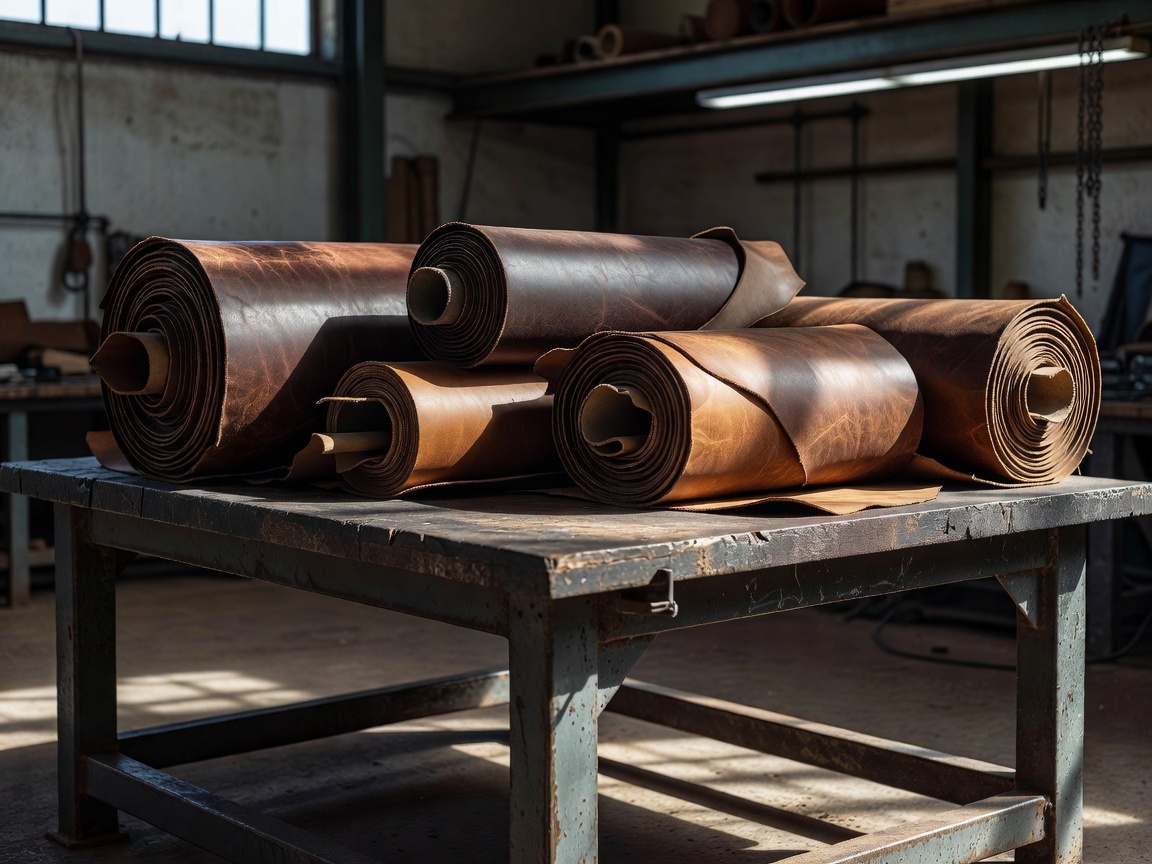
Vegetable Tanning: Often abbreviated as "veg-tan," this is the oldest form of tanning. It utilizes natural tannins extracted from tree bark, leaves, and branches. The process is lengthy, often taking several weeks to months in tanning pits. Vegetable-tanned leather is characterized by its stiffness, its ability to be carved and tooled (stamped), and its capacity to absorb water. Critically, veg-tan leather edges can be beautifully burnished with friction and water. Over time, veg-tan develops a rich patina, darkening as it absorbs natural oils and sunlight.
Chrome Tanning: Introduced in the mid-19th century, chrome tanning uses chromium sulfates and other chemicals to tan the hide in a matter of days. This leather is exceptionally soft, pliable, and resistant to water and heat. The colors remain stable and do not develop a patina in the same way veg-tan does. Because of its soft temper, it is the primary leather used for upholstery, garments, and slouchy bags. However, chrome-tanned leather cannot be traditionally edge-burnished; its edges must be rolled, bound, or painted with edge paint.
Understanding Leather Weights (Thickness)
In many regions, leather thickness is measured in ounces (oz). This measurement system can be confusing because it refers to the weight of one square foot of the leather, which corresponds directly to its thickness. One ounce equals approximately 1/64 of an inch (0.4mm).
| Ounce Weight | Millimeters (Approx.) | Common Applications |
|---|---|---|
| 2 - 3 oz | 0.8 - 1.2 mm | Wallet linings, gussets, watch straps |
| 4 - 5 oz | 1.6 - 2.0 mm | Wallet exteriors, light bags, notebook covers |
| 6 - 7 oz | 2.4 - 2.8 mm | Heavy bags, knife sheaths, lightweight belts |
| 8 - 10 oz | 3.2 - 4.0 mm | Heavy duty belts, holsters, saddle bags |
Grain Terminology
The term "grain" refers to the outermost layer of the animal's skin. The integrity of the grain layer dictates the durability and price of the leather.
Full-Grain Leather: The highest quality leather available. The outer layer of the hide is left completely intact, preserving the dense, tightly bound fibers. It retains all natural markings, scars, and grain patterns. Because the surface is unadulterated, it is the strongest and most durable form of leather.
Top-Grain Leather: The second-highest tier. The very top surface of the hide is sanded or buffed to remove imperfections and blemishes, creating a uniform appearance. While this creates a flawless look, it removes the strongest fibers of the hide, making it slightly less durable than full-grain. It is often given an artificial grain pattern via plating.
Genuine Leather / Split Leather: The term "genuine leather" is highly deceptive. It typically refers to the lower layers of the hide that have been split away from the top grain. This material is fibrous, lacks structural integrity, and is often coated with heavy layers of pigment and polyurethane to mimic a natural grain. It degrades quickly under stress.
Conclusion
A successful leather project relies heavily on material selection. A cardholder requires a firm temper 3oz veg-tan to hold its shape, while a soft tote bag demands the drape and pliability of a 5oz chrome-tan. By understanding tannages, weights, and grain types, you can look beyond marketing terminology and select hides based purely on their structural properties.