The Mechanics of the Traditional Saddle Stitch
Why hand-sewn leather outperforms machine lock-stitching. We detail thread selection, tension, and the structural advantages of traditional techniques.
The saddle stitch is the hallmark of premium leathercraft. It is an entirely manual process, performed with a single length of thread and two blunt harness needles. While industrial sewing machines can rapidly assemble leather goods, they utilize a different structural mechanism known as a lock stitch, which is inherently weaker when subjected to the extreme wear leather goods face.
Saddle Stitch vs. Lock Stitch
To understand the value of the saddle stitch, one must understand how a sewing machine operates. A sewing machine uses two separate threads: a top thread and a bobbin thread. The needle pushes the top thread down through the leather, where it loops around the bobbin thread before being pulled back up, locking the stitch inside the hole. If a lock stitch breaks at any point due to abrasion, the entire line of stitching can unravel with a simple pull, as the loops are no longer secured.
A saddle stitch utilizes a single continuous thread. Needles are attached to both ends. For every hole, both needles pass entirely through the leather from opposite sides, crossing each other within the hole. This creates an overlapping figure-eight pattern throughout the seam. If a saddle stitch thread is severed by abrasion or wear, the thread from the opposite side continues to hold the seam together independently. It will not unravel, making it vastly superior for goods intended to last generations.
Preparation and Hole Punching
The saddle stitch relies on perfectly prepared holes. Unlike fabric, leather is too dense to force a needle through by hand. Holes must be created beforehand using either diamond chisels or pricking irons.
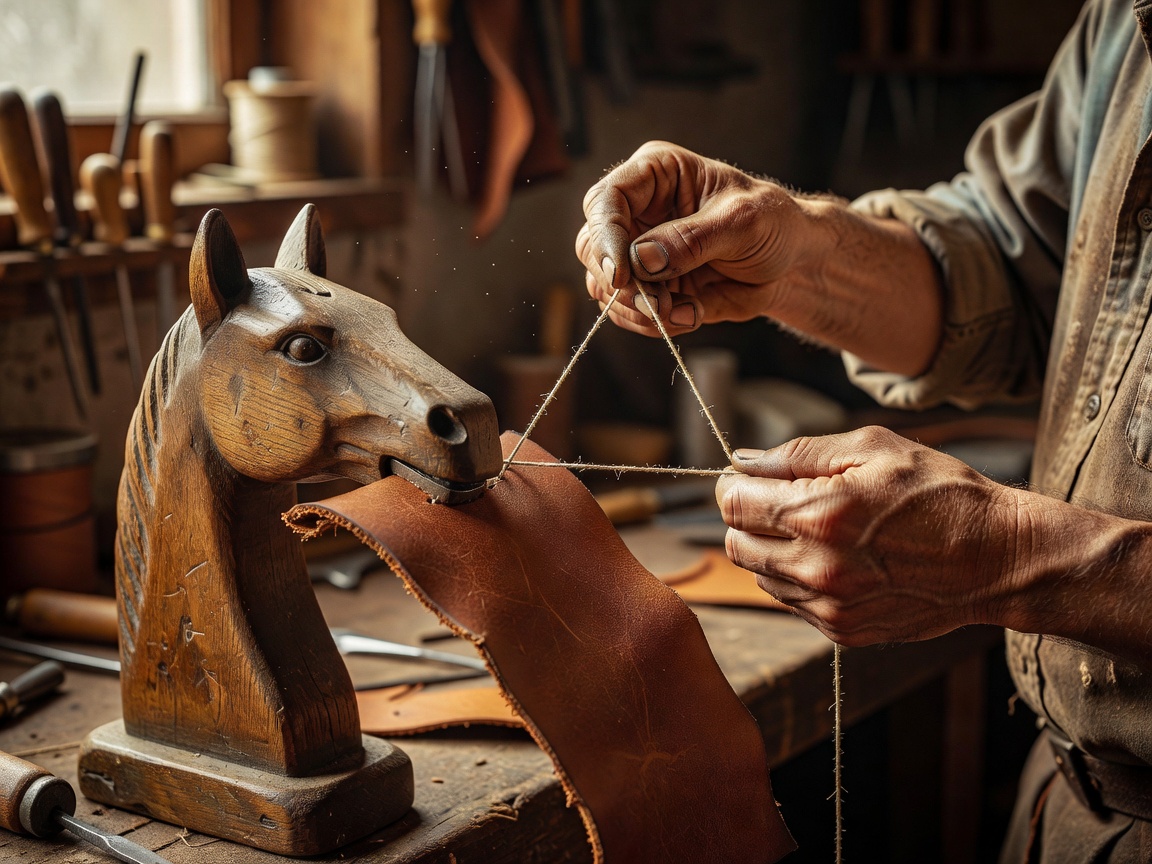
The spacing of the holes is critical for aesthetics. Common spacings are 3mm, 4mm, and 5mm apart. A smaller spacing yields a highly refined, delicate look suitable for watch straps and fine wallets, while a larger spacing provides a robust look for belts and briefcases. Once the holes are punched, a stitching pony—a wooden clamp that holds the leather securely between the crafter's knees—is used to free both hands for the stitching process.
Executing the Stitch
The physical act of saddle stitching involves a specific rhythm. While crafters develop their own micro-habits, the foundational sequence remains the same:
- Thread a needle onto each end of a piece of waxed thread. (The thread length should generally be 3 to 4 times the length of the seam to be sewn).
- Pass one needle through the first hole and pull the thread until there are equal lengths on both sides of the leather.
- Take the needle on the right side and push it into the next hole.
- Before pulling it all the way through, take the left needle and push it into the same hole, being careful not to pierce the first thread.
- Grasp both needles and pull firmly outward simultaneously to set the tension.
Consistent tension is the secret to a professional appearance. If one stitch is pulled tighter than the next, the seam will look jagged and uneven.
Thread Selection
Thread choice directly impacts the final look. Traditionalists favor heavily waxed linen thread, such as Fil au Chinois Lin Câblé. Linen sits beautifully flat and provides a highly traditional look, but it can be susceptible to rotting if exposed to constant moisture without proper waxing. Modern crafters frequently utilize braided waxed polyester threads, like Ritza 25 (Tiger Thread), which are immune to moisture rot and lay extremely flat in the stitch line.
Conclusion
The saddle stitch represents a commitment to longevity. It cannot be replicated by a machine. While it requires significantly more time to execute, understanding the mechanics of this stitch allows a crafter to produce items that possess structural integrity far exceeding mass-produced commercial goods.